Saturday, June 25, 2011

City of Fallen Angels by Cassandra Clare

City of Fallen Angels by Cassandra Clare

Hardback, 2011, 424 pages. Library copy.

I've read some reviews on Goodreads, and it seems like people either love this book or loathe it. I'm somewhere in between, but I learn toward loving it. I read the first three so quickly. Her writing does that to me - I cannot put the darn book down, I find myself reading ahead and have to force myself to stick to the current line I'm on.

After I picked this book up from the library, though, I had to read a summary on the first three because I honestly could remember very little of what happened. Valentine wanted to kill Downworlders, Simon became a vampire who could walk in daylight, Jace and Clary thought they were siblings or fa while, they took Valentine out in the end. . .did anything else happen? Yes, apparently, quite a lot, and I actually had to call my 13 year old sister to ask her, 'Wait, who are Jace's parents again??'

Anyways, as predicted, I read this book in a few sittings. Just like when I was fourteen and I was so friggin excited when she'd update Draco Veritas and I'd soak up those words as quickly as I could (though I later learned the words weren't all hers lol), I couldn't put this book down. Well, I did a few times because I had to sleep or go to an appointment, but you get the idea.

The book picks up six weeks after City of Glass. Clary's mom and Luke are getting married. Simon is trying to adjust to vampire life, being made offers and also being attacked by strange men. Clary and Jace are training and kind of happy, but not really. Strange things are happening, though - someone is killing Shadowhunters, and someone else is messing with human babies. The crew does their individual research, and they find out that it's all connected by a darker evil than they could have imagined. Yeah, I never said I was really good at writing blurbs, okay?

Is it perfect? No. Are Clary and Jace melodramatic? Yes. Does some of the dialogue make me cringe? Yes. Regardless, I thought there were some very intriguing ideas here, and I liked how the plot played out. Plus Simon makes this book very awesome. I love seeing more of him, and even though he was getting a little whiny towards, I think he's finally getting it together by the end. I think at times Clare tries to chase after too many subplots (do I care about Alec and Magnus? No, actually, I don't. And I care about Maia and Jordan only a little bit more). I think if she went deeper into just a few characters, it'd be better.

Some people thought the plot moved slowly and had too much dialogue, but I thought it was a reasonable pace. Not everything can go a million miles a minute, and I thought it was a lot more like "real life" even with the demon babies and pillars of salt and everything.

I'll be watching for the next installment, and Clockwork Prince (and I liked her little nod to that world!). Who knows? I might even go read the first three again. It'll probably be like reading them for the first time since it went straight through me last time.

Sidenote: I don't really like this cover. Clary's eyes look weird. And is that supposed to be Simon? What's with the arrows??

Second sidenote I forgot to add: I like Clary. She doesn't wait around for people to save her, but she's also not invincible. Yes, she mopes over Jace, but it doesn't inhibit her from everything. She was probably more preoccupied with Jace in this book than others (although I could be wrong considering I hardly remember the others). I still like her.

I won The Fiddler's Green by A.S. Peterson!

I bought The Fiddler's Gun by A.S. Peterson on my Kindle the other week, and while looking around, I found a contest to give away the sequel The Fiddler's Green here at A Few More Pages. I won the contest! I received a nice new book in the mail the other day! Problem is, I'm only 60% through The Fiddler's Gun, so I need to finish it! But it's really good, I'm already excited to read the sequel :) Check out the series if you'd like an exciting story. It's like Anne of Green Gables meets Pirates of the Caribbean! So, expect a few book reviews soon!

Also to come: A review in City of Fallen Angels by Cassandra Clare, 13 Treasures by Michelle Harrison, and a book/movie post of Lord of the Rings: Fellowship of the Ring!

Wednesday, June 8, 2011

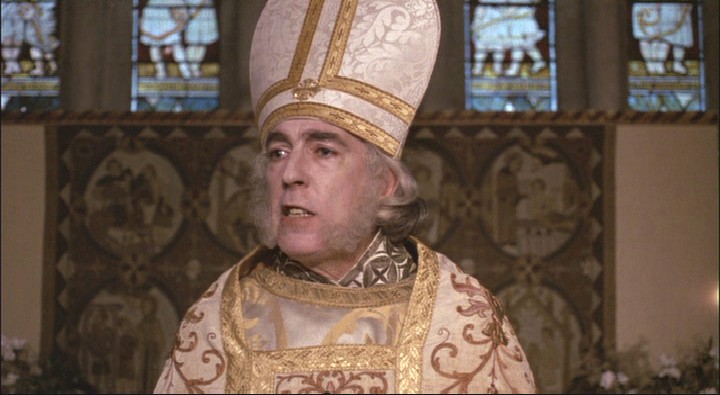
Book/Movie Comparison: The Princess Bride

Let me just take a moment and say how much I LOVE this movie and this book. They are so clever and enjoyable.

The book was written by William Goldman and published in 1973. Goldman presents this book as "the 'good parts' version of S. Morgenstern's Classic Tale of True Love and High Adventure." In a European country called Florin, Buttercup and Westley fight for their true love in the face of murdering pirates and violent princes.

The novel was adapted to screen by Goldman, who had previous work with screenwriting. It was directed by Rob Reiner, and Cary Elwes and Robin Wright star as Westley and Buttercup. In the movie, a man reads the book to his sick grandson, similar to how William Goldman's father supposedly read it to him.

For my few posts, this is the first where the author has adapted the screenplay. (As a writer, I'll just say that would be hard! I'd actually like to try it sometime, just for fun.) Before The Princess Bride movie, Goldman wrote screenplays for Butch Cassidy and the Sundance Kid, The Stepford Wives, and others. Since he was the author of the novel, though, the essence of the book transferred onto film nearly flawlessly, even while he hacked away the book's story to include only the essentials. You have a lot of the same lines and everything.

Like other posts, I'll look at Setting, Characters, Theme, What Was Gained by Film Adaptation, and What Was Lost by Film Adaptation.

Setting
I'm glad they still kept the idea that The Princess Bride was a book outside of our own world. It keeps that fantasy feel, and we got to see the sick grandson's responses to different parts of the story, like we saw Goldman's reactions in the novel. Of course, Goldman reacted to many things, including Morgenstern's choice not to include the reunion scene (I'm glad they did in the movie!) and the original author's 86-page tangents on politics. There were some asides from Goldman that simply wouldn't transfer to film well.

As for Florin, I'm amazed at the simplicity of the sets and yet how real it seemed. The setting probably wasn't give the same painstaking detail of a fantasy movie like Lord of the Rings, but it's the simplicity of the movie that really makes the setting. It feels like it could be any country in Western Europe (or the idea of Western Europe that we have in our heads).

The Zoo of Death would have been cool on film, but I understand why they took it out. Can you imagine all those crazy animals, though?

Characters
There was a lot in the hefty book that missed the film adaptation: Inigo and Fezzik's pasts, the humorous descriptions of Buttercup's beauty, her later nightmares, the expansion on the prince's character. I feel like the movie is high school algebra and the book is college algebra. You go into so much more depth! You have that issue with every book and movie adaptation, though. If only every book could be adapted into a TV series like Game of Thrones. (Sidenotes: but seriously, how awesome would a Harry Potter miniseries have been?? Seven seasons, one for each year?? Although the first three years would have been pretty sparse. . .)

Overall, the characters were so close to their original book counterparts. Fezzik is big, bumbling, and kind. Inigo is determined, even though he loses focus after Vizzini dies. Westley has the same courage and cunning. The prince is just as violent and cowardly. Buttercup was a more ditzy in the book, but I can see why they'd want to make her more likable and smart in the movie.

Theme
Wuv - twoo wuv! The most prevalent theme in the movie is true love, and this is certainly a theme in the book. Buttercup and Westley fall in love in the first chapter, and they fight through the entire book to stay together. Inigo's quest for revenge drove much of the movie, too.

I think there was a lot that missed the movie, though, mainly because the screenplay didn't have room for so many different storylines. I also think that the movie was more optimistic than the book. The book was dark at parts: the Zoo of Death and the absolute fear it drives into Inigo and Fezzik; Inigo's and Fezzik's slightly desolate pasts. The book actually doesn't have a happy ending; it has a very ambiguous ending which alludes to death and misfortune, and Goldman uses it to drive a point home: life isn't fair.

To be honest, I think this was a smart move for the movie. For some reason, books can get away with unhappy endings and bitter themes better than movies. I would have felt pretty gypped if Buttercup and Westley didn't have the number one kiss at the end and the grandpa didn't leave after saying, 'As you wish.'

What Was Gained
Really, the movie is the 'great parts version' of the 'good parts version.' It takes the essence of the story and puts it into film: the basic story of Buttercup and Westley, the fight for their love. It's stripped of the the dark humor, the strange pasts of the minor characters, the violence of Prince Humperdink and his Zoo of Death, and gives you a hopeful story with some hilarious lines. Like I said, movies really get away with more than books when it comes to optimism. If this movie were a book - and not the original book, but just what the movie was comprised of - it would be boring. There wouldn't be enough conflict; it would be too simple. But as a movie, it's awesome.

What Was Lost
I'm town what to write here. Like I said, a lot of the narrative was left-out. But I don't think the film adaptation suffered because of it. It was probably better because of it, even though the book was great with it. Say it with me: mini-series!


Tuesday, June 7, 2011

Reading into the Bible

This is not like my usual posts, but I've been thinking about it lately. I recently read the story of David and Bathsheba in 1 Samuel 11 and 12. For those who aren't familiar, David sees Bathsheba bathing from the roof of his palace. He summons her, he sleeps with her, and she gets pregnant. When she sends word, he calls her husband home from war and tries to get him to sleep with his wife. Her husband is an honorable man, though, refusing to sleep with his wife while Israel is at war, so David kills him on the battle field. The Lord rebukes David through the prophet Nathan, and as punishment for his sins, Bathsheba's son dies. She has another son, though: Solomon, who ends up succeeding his father on the throne and building the Lord's temple.

There are some people who read into this story and try to place blame on Bathsheba. Their reasoning is she was trying to seduce the king or she should have been more careful. This isn't supported by the biblical text, but it comes up whenever David and Bathsheba is mentioned. Somebody will ask, 'Well, what was she doing bathing for everyone to see??'

The fact of it, though, is God doesn't blame Bathsheba for anything at all. The punishment is carried out solely because of David. Why do we feel the need to read into this? Why do we want to add to the story? I think it's partially because David is commended as a man after God's own heart, and no one wants a man of God to have so much sin in his life.

Here's another story on the opposite end of the spectrum. In the beginning of the book of Esther, the Persian king Xerxes throws a banquet. When he tells his wife Vashti to come join him and his guests and show off her beauty and her royal crown, she refuses. They throw her out of the palace because she had the nerve to disobey the king.

Some sources try to say that King Xerxes wants the queen to come parade around naked. Others say everyone in the banquet would be blind drunk (and it does say King Xerxes was "high in spirits") so it wouldn't be a good place for Vashti. They claim that it was common sense not to go. This isn't supported in the biblical text or in the historical studies of ancient Persian culture.

Again, why are we adding to the story? I know the Bible leaves a lot of details out, many of which deal with the motivations of these people. But I don't think we should be adding our own take on things. I think when we do that, we make our own meaning of the story. With Bathsheba and David, we can say the moral of the story is, 'Don't seduce men with your body' and with Vashti and King Xerxes, 'Stick up for yourself.' Although these messages are found elsewhere in the Bible, it's not the message of these stories. The point of the story of David and Bathsheba is to show God's grace (David sinned and yet God gave him a successor to the throne through this union), and the point of Vashti's story is to set the stage for Esther to become queen and to show what Esther was going to face.

When we throw our own interpretation into it that isn't backed up by the text or by historical interpretation, we step away from the original meaning. I think it's okay to theorize - people always will - but we should never treat our theories as fact.

Saturday, June 4, 2011

The Hunger Games and Books into Movies

I've been following The Hunger Games movie news pretty religiously. I loved the trilogy and I'm really excited to see it on screen. It's been really interesting watching fan reactions to the casting news, especially Katniss.

I am a huge fan of Harry Potter and I was disappointed by the movies over and over again. By the fifth movie, I was not expecting anything good. (I absolutely loved Deathly Hallows Part 1, so the series did redeem itself.) Because of the Harry Potter movie franchise, I feel more prepared for The Hunger Games. I'm not going into this expecting to see a perfect representation of the books on screen. I don't care what the characters look like, as long as they capture the essence of the character. (We could get into the controversial whitewashing, but I'd rather not.) The movie is nearly a year away, and I'm already hearing (reading, actually) fans say, 'They're going to ruin it.' 'They don't know what they're doing.' You can find general outrage anywhere - on the Facebook fan page, on youtube videos, livejournal communities, etc.

This has got me thinking about what these books must mean to the fans. Yes, they get upset over little things (does Peeta being blonde really matter in the grand scheme of things?), but I think it's because they've really fallen in love with these characters. The world of Panem has become so real to them that to think of it in somebody else's hands, eventually on screen, is tough. When people read books, they create the world in their heads based on the words given them. When people make movies, it's a collective effort to turn words into a visual experience. As readers and viewers, we have to realize that they are two separate art forms. Although the skeleton of the story may be the same, the flesh and blood of the two are going to be very different.

What's important to me when it comes to The Hunger Games movies is the messages it has about war, violence, classism, and entertainment. Katniss' brokenness is going to stick with me a lot longer than the clothes she wears. The horrific nature of war is going to mean more to me than whether Cinna is young. That's what, for me, made these books so moving.

I cannot wait to write a book/movie comparison post for this movie when it comes out. In the meantime, I'll write one for The Princess Bride soon!

Sunday, May 29, 2011

Uncommon Magic by Michelle Scott

Uncommon Magic by Michelle Scott

Kindle edition, published 2011. Apparently 232 print pages.

I'm not sure where I heard of this book, but I had a sample on my Kindle, and I finally got around to reading it. I read the sample in the morning, bought the book around 5pm, and finished it that night!

The book has an intriguing premise. Copied and pasted from Goodreads: In Mira Meadowmarsh's world, Magicians have complete control over ordinary people like herself. Magicians rule with iron fists, levying taxes, seizing property, and meting out harsh punishment to those who break the rules. But while the un-magical commons cannot defend themselves against the Magician's magic, there is one thing that Magicians fear: inventions. So when rumors spread that the un-magical are building machines and planning an uprising, the Magicians retaliate with even harsher laws.

At first, all of this means nothing to Mira who doesn't give a fig about politics. She's in love, and life is sweet. But when she discovers that her brother is an inventor who's suddenly the most wanted man in the country and that the boy she loves, her companion since childhood, is really a Magician, Mira finds herself in the middle of a brewing revolution.

It's an interesting setup! Very creative. Personally, I would have liked to see more magic, but the focus was on the commons most of the time, not the Magicians. It was a really nice read; I didn't want to put it down until I was done. the writing flowed really well; it wasn't full of action every page, but something made me want to keep reading.

I liked Mira. I thought she could have been a little bit more active. Throughout the whole thing, she was mostly the girl on the outside of everything that was happening, but it was kind of a coming-of-age story for her. She grew up, she made some hard decisions. Some of them, especially towards the end, I was thinking, "No! No, don't do it!" But it played out pretty well. It was almost too simple, and I wanted it to keep going. I wanted the author to explore Mira's relationships with Quentin and Jess, but I'm sure it wouldn't have made a very good book. The main conflict was over, I get that. As a reader, though, I was loving the story and the characters and dying to know more about them! Especially the boys and Liam, who I felt weren't explored well enough.

Other small things: I'm sure it was the translation from .doc to .html/.mobi, but there was a lot of words that were missing spaces. Likethis. Some typos or weird sentences, but it didn't stop me from finishing it and enjoying it! I'd recommend it to people who like fantasy stories that aren't too complex and would like a fun read.

Saturday, May 21, 2011

Fire by Kristin Cashore

Fire by Kristin Cashore.

Hardback, published 2009, 461 pages. Library copy.

I picked up this book after reading Graceling and enjoying it. I read bits and pieces of the beginning, then read nearly 300 pages last night, and finished it today.

Fire is a monster in the Dells. She has bright red hair and looks that make monsters and men attracted to her, sometimes dangerously so. Fire becomes involved in the political moves of the royal family of the Dells when they realize her mental capabilities to get information she needs. Honestly, the book doesn't have one single plot but rather a collection of subplots, all intriguing.

The main difference between Fire and Graceling is the pace. Though both are fairly slow-paced compared to most YA fantasy I've read, Fire has a slower pace than its counterpart. It has more focus on the politics of the Dells: the king who left behind a messy kingdom and the two Lords rebelling against him. Fire also has much of the shame that Katsa had from her ability and also from her father, who ruled the past king with cruelty. Fire feels like an object and refuses to be used for malicious means. Unlike Katsa, however, Fire rarely physically defends herself. She relies on her mind and her control over other people's minds. It would have been nice to actually see her not get rescued, but she kept getting into pretty horrific situations and she was not physically strong aside from her bow and arrow.

Fire goes through a lot in the book. In the beginning of the book, she's very solitary with about as many friends as she has fingers on one hand. Later when she travels to the King's City, she's faced with the reality of her blood. Monsters hunt her, some men want to overpower her, others want to marry her. She slowly rises above this shame to help the royal court with the spies and forms special relationships. Ultimately, it's a story of her development as she uses her powers for good, comes to accept who she is, and forgives herself for things she's done in the past.

Overall, I really liked Fire, but I wished more could have happened. The romance was so underplayed compared to Katsa and Po, and I kept thinking, "When are they going to get together??" I can't deny the politics were very interesting, but I'm left hoping more could happen with the characters I've grown to love.

Note: I read the hardback with the above cover, but isn't this one beautiful??

Monday, May 9, 2011

Before I Fall by Lauren Oliver

Before I Fall by Lauren Oliver.

Hardback, 2010, 470 pages. Library copy.

In this book, Samantha Kingston dies. She then relives her last day on earth six more times. Through the week, she learns new things about her friends and her school, she talks with people she never would have before, and she changes from a mean girl to a happier, more accepting person.

This is such an interesting premise. Seriously, how did she think of this? I know that's kind of a lame question because when people ask me the same questions, I don't have an answer. The human mind is just so creative, and Lauren Oliver has loads of creativity and talent. You'd think that Sam living one day over seven times would get boring, but the author really takes the characters and shakes them around. Something new happens each day, and as Sam struggles to find closure, you can see her changing.

I loved the varying characters in this book. There are a lot of minor characters, and occasionally I couldn't tell them apart, but for the most part, they're all unique and interesting. Sam's friends, too. I think Oliver fell into that "high school royalty vs. everyone else" stereotype a few times in this book. I only went to a public school for one year, and while there are obvious differences, popularity levels, and cliques, I really don't think it's this extreme. I have other people who would agree, but it's a setting that works in many novels, including this one. It still makes you think about your actions, about the way you treat other people, about the reasons behind your attitudes and behaviors.

After reading this book, I still felt like there was something missing from the story. It took me a while to realize it, but when I read a review on Goodreads, I realized it was Sam's friends and their redemption. Slight spoilers: Though Sam goes through a transformation from the beginning to the end of the book, Sam's friends are kind of left as mean girls. Yes, we see some of their motivations, and Lindsay is definitely more explored than Elody and Ally, but I was still left wondering if they realized the wrong of any of their actions. I don't think people change quickly, though. I like how the author didn't make Juliet's story simple, and I know if Sam's friends were to change, we wouldn't see it within a week. Maybe that's the point, that this is Sam's story. But I still would have liked to see someone other than Juliet call out Lindsay. End of spoilers.

Lauren Oliver has a great way with language, especially with repeated metaphorical images such as birds in flight. This was the type of book where I was reading it so quickly to get to see what would happen, and I had to force myself to slow down to enjoy the beautiful language of it. I highly recommend it and I will definitely check out Delirium. I put a hold on it at the library already!

Wednesday, May 4, 2011

Graceling by Kristin Cashore

Graceling by Kristin Cashore

I read a hardback copy with the right cover, but I LOVE the left cover. I checked this book out from the library.

Graceling is set in a world where certain people are born with Graces. The Grace of deception, the Grace of fire, and more. Katsa's Grace is killing. She found out about it at a young age when she accidentally killed a man trying to touch her, and her uncle King Randa soon began using her as a thug. This is Katsa's story as she grows into her own woman, investigates a mysterious kidnapping, and falls in love.

I've seen this book around, but when I saw it at the library, I decided not to put off reading it anymore. I really liked it. I haven't read a lot of stand-alone fantasy novels, so it was nice to see one. It doesn't have the constant action and adventure I was expecting, but it is a thrilling read. The story was fascinating, especially Graces and the Council. I'd like a sequel about the Council's doings around the seven kingdoms, but Bitterblue will do.

The romance was just right. I like how compatible Katsa and Po are from the beginning. At times, I thought Katsa was too invincible. The fact that she could survive absolutely anything brings down the suspense. But I enjoyed reading about her inner turmoil as she was used by her uncle, as she decided to step away from him, as she was falling in love with Po. I wasn't a huge fan of the anti-marriage, casual sex attitude, but I understood Katsa's point of view.

I'm looking forward to Fire, which I put a hold on at the library. I'd like a more vulnerable female character, but I guess young adult literature (and literature in general) has plenty of those. For every Katsa, there are a thousand Bellas. And no, the similarity between Katsa and Katniss was not lost on me. ;)

Sunday, April 24, 2011

Gone by Michael Grant

Gone by Michael Grant

Published in 2008, read on my iPhone, purchased through iBooks for only $1.99!

In this book, everyone over fourteen disappears in the blink of an eye. Kids are left in Perdido Beach by themselves. Luckily, the power plant still works, but everything else: internet, phones, school, and everything the adults controlled is gone along with the adults. The place recalls themselves FAYZ: Fallout Alley Youth Zone. The disappearance isn't the only thing amiss. Kids are developing powers, coyotes can speak, snakes are growing wings, and there's a barrier encompassing them in a twenty mile radius. The kids have to figure out how to deal with each other as well as dangerous new circumstances.

I give this book 3 stars for writing, 4 for story. It was a very interesting story - only kids left, new powers, a power struggle between Coates kids and townies. I read the last two thirds of it all in two days, and it's a pretty hefty book (about 575 pages in print). I didn't know what to expect next. It feels like anything can happen in the FAYZ. There's some "Darkness" trying to take control of everything and even though we know the cause of the FAYZ by the end of Gone, we don't know the cause of the mutations or the origin or purpose of the Darkness or where the adults went. I guess there are six in the series, and the last two haven't been published yet.

The 3 stars for writing is just because the book feels very spread out. It's a huge cast of characters and hard to keep track of all of them, plus the author throws in everybody's POV. But I still really enjoyed it and I will check out the sequel.

Sidenote: These covers are hilarious. Are they supposed to be FOURTEEN? You're not fooling anyone. HarperCollins. . .